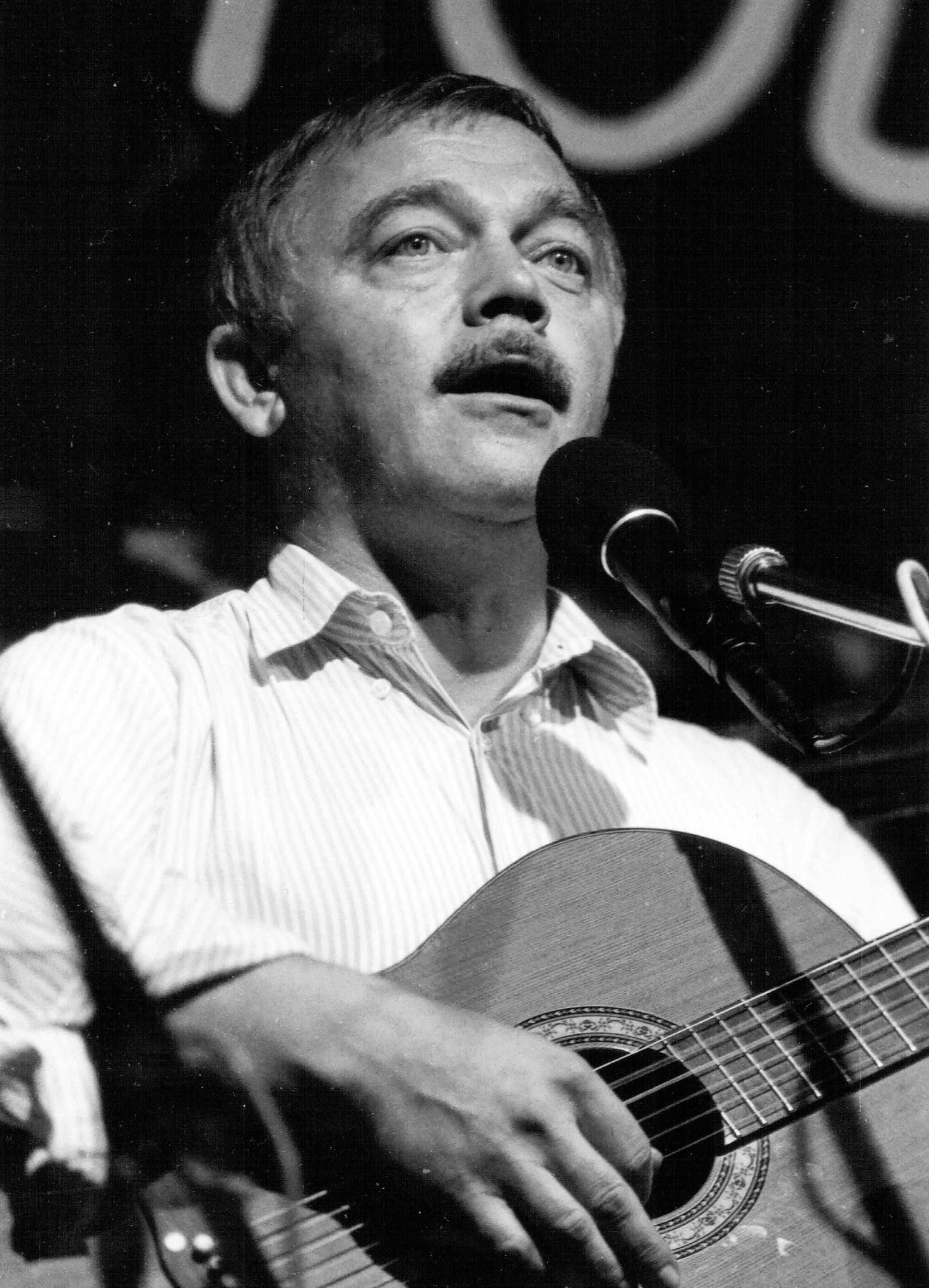
Karel Kryl (12 April 1944 – 3 March 1994) was a Czechoslovak poet, singer-songwriter and author of many hit protest songs in which he explicitly criticized the Communist (and later also the post-communist) regimes in his home country for their hypocrisy and inhumanity. The lyrics of Kryl's songs are highly poetic and sophisticated, with perfect rhyming and a frequent use of metaphors and historical allusions. The sparse sounds of his guitar served to underscore the natural flow of the lyrics themselves. Kryl has been compared with the young Bob Dylan, because of the complexity of his lyrics, h
Karel Kryl (12 April 1944 – 3 March 1994) was a Czechoslovak poet, singer-songwriter and author of many hit protest songs in which he explicitly criticized the Communist (and later also the post-communist) regimes in his home country for their hypocrisy and inhumanity.
The lyrics of Kryl's songs are highly poetic and sophisticated, with perfect rhyming and a frequent use of metaphors and historical allusions. The sparse sounds of his guitar served to underscore the natural flow of the lyrics themselves. Kryl has been compared with the young Bob Dylan, because of the complexity of his lyrics, his accompaniment by a single acoustic guitar, and his great popularity.
Having lived for twenty years in forced exile, he was initially keen on the collapse of communism in his country, but very quickly he became bitterly and uncompromisingly critical of the new regime and its protagonists as well, including Václav Havel, and especially of those who were responsible for the dissolution of Czechoslovakia in 1992.
0 comentarii0 vizualizări0 reacții
Karel Kryla adăugat o fotografie
acum 5 zile
R.I.P Karel
Biography Kryl was born on 12 April 1944 in Kroměříž, in the Nazi occupied Protectorate of Bohemia and Moravia, however his family had roots in Nový Jičín, where they later moved to. The Kryl family owned a printing business, which was confiscated from them after the communist takeover in 1948. Kryl planned to be a potter and studied at an industrial secondary school in Bechyně where he specialized in ceramics. He graduated in 1962. Kryl moved to Prague in 1968 as an assistant at Czechoslovak Television. In his spare time he performed his romantic and satiric folk songs in numerous small clubs. When the Warsaw Pact armies occupied Czechoslovakia on 21 August 1968 to suppress the Prague Spring reform movement, Kryl released his first album. The title song Bratříčku zavírej vrátka (Keep the Gate Closed, Little Brother) was composed spontaneously on 22 August 1968 as an immediate reaction to the occupation. The album described his perception of the inhumanity of the regime and his views on life under communist rule. The album, released in early 1969, was banned and removed from shelves shortly after, but this could not prevent the songs from getting around the audience and becoming cult hits.…
0 comentarii0 vizualizări0 reacții
Karel Kryla adăugat o fotografie
acum 5 zile
R.I.P Karel
Awards
1989 – the Jan Zahradníček award for Czech Poetry, from the Czechoslovak Literature Club in Los Angeles
0 comentarii0 vizualizări0 reacții
Karel Kryla lăsat un gând
acum 5 zile
in memoriam:
1994 – a silver memorial medal from the Charles University for contributions to the spiritual development and the moral support of the nation
0 comentarii0 vizualizări0 reacții
Karel Kryla lăsat un gând
acum 5 zile
1995 – the Czech Grammy
1995 – Medal of Merit II. class from president Václav Havel
0 comentarii0 vizualizări0 reacții
Karel Kryla lăsat un gând
acum 5 zile
Rozhovory
Demokracie, aneb s malou vadou na kráse…
0 comentarii0 vizualizări0 reacții
Karel Kryla lăsat un gând
acum 5 zile
Discography
Karel Kryl only released one album in Czechoslovakia (Bratříčku, zavírej vrátka), but he released many albums while in exile, a prominent example would be Tekuté písky.
Bratříčku, zavírej vrátka (1969, LP, Panton, ČSSR)